Accessible On-Demand Transit Booking via WhatsApp Bot

Remove digital barriers, streamline call-center operations, and provide seamless, zero-download DRT booking for all demographic groups. All with Nemi’s on demand Whatsapp transit Bot. 

Core WhatsApp Booking Experience

Core DRT Passenger App Experience

Our conversational WhatsApp Bot removes the primary barrier to flexible public transit: app adoption friction. Engineered for rural commuters, senior citizens, and occasional riders, it provides complete booking autonomy via standard chat messaging while feeding real-time demand data straight into your dispatch system.

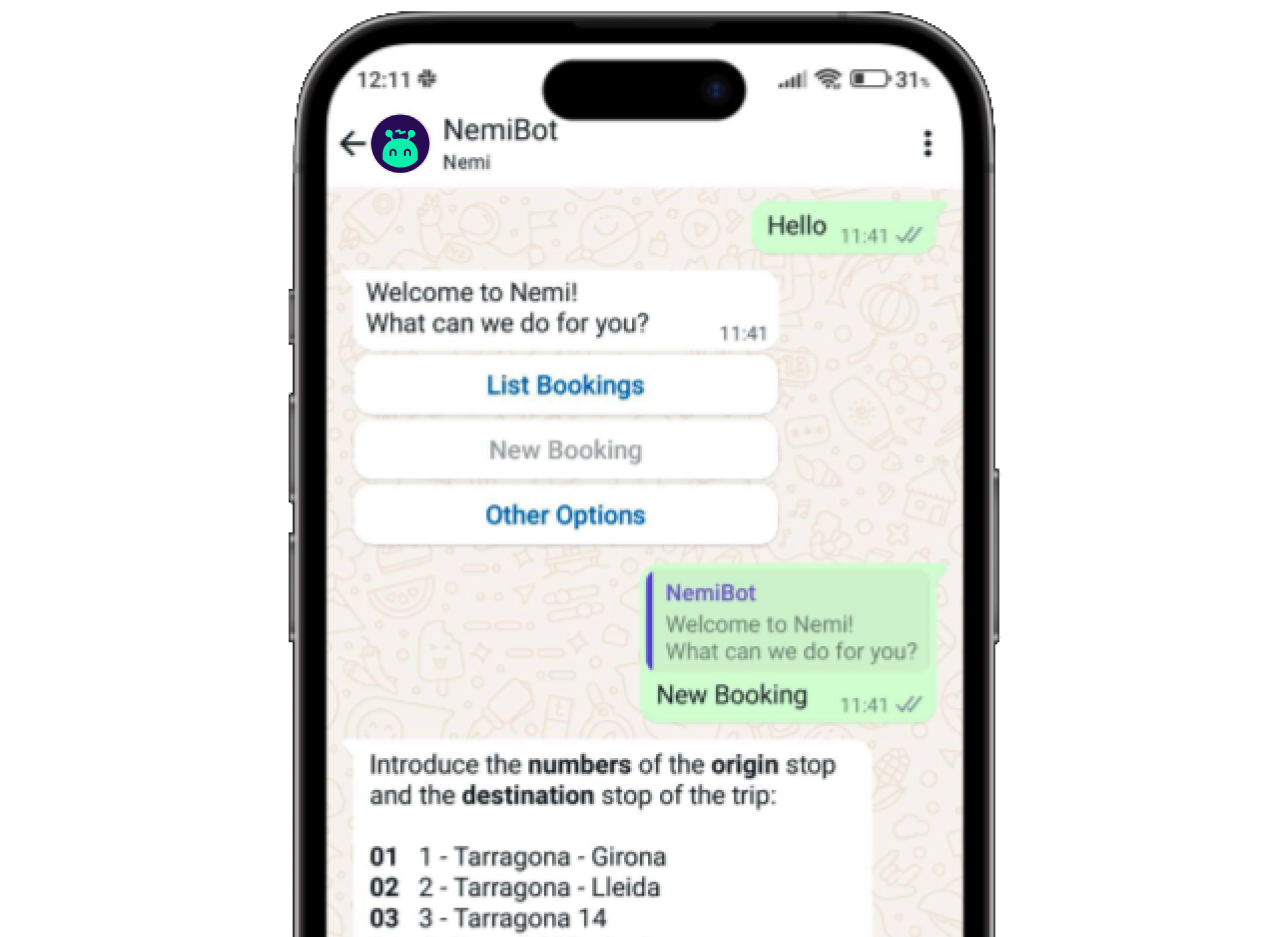
Real-Time Conversational Booking

From requesting a trip in plain text to receiving instant booking confirmations, passengers enjoy an intuitive, step-by-step chat flow. The bot delivers estimated pick-up times, live vehicle tracking links, and automated service reminders.

Multi-Language & Dialect Support

To ensure immediate community adoption across diverse regions, the WhatsApp Bot natively supports conversational flows in English, Spanish, Italian, Portuguese, Greek, Catalan, and Basque.
Built for Universal Inclusion & Operational Relief

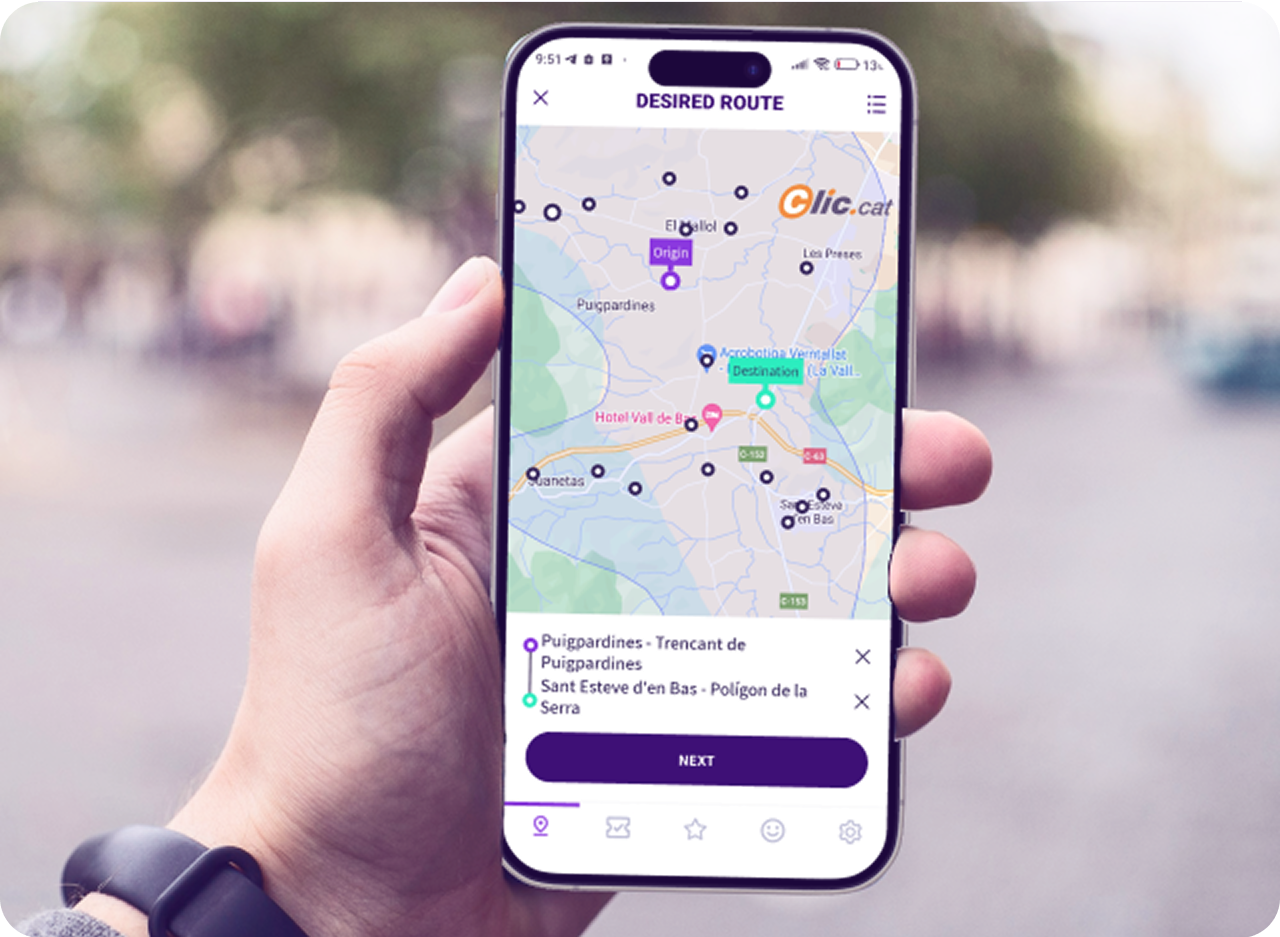
Older person reserving a ride with our on demand whatsapp bot service.

Public transit must remain accessible regardless of smartphone literacy or digital skills. Nemi’s WhatsApp Bot bridges the digital divide, allowing vulnerable demographics to interact with modern demand-responsive transit without downloading a dedicated app or navigating complex UI interfaces.

Operational Efficiency & Frictionless Passenger Access
  • Call-Center Automation & Cost Reduction: Automatically offload routine trip reservations, cancellations, and schedule inquiries from manual phone operators. This lowers operational overheads (OPEX) for transport authorities while maintaining a 24/7 accessible booking channel.

  • Zero-Friction User Onboarding: Passengers book rides within an app they already use daily. Eliminates account creation barriers, storage space constraints, and continuous app store update requirements for less tech-savvy users.

Customization & System Logic

Total System Integration & Automated Logic

The technology adapts to your network, not the other way around. Nemi offers a fully customizable framework that allows transport authorities and private operators to connect with users throught the Whatsapp Bot.

Passenger No-Show Controls: To protect fleet efficiency and discourage ghost bookings via messaging channels, the bot can set accountability alerts. If a rider frequently misses their scheduled vehicle, the backend can send reminders and gentle custom warnings regarding potential temporary booking restrictions.

Feedback Loops: Keep your passenger community engaged and informed. Operators can deliver automated in-chat satisfaction surveys straight to riders’ smartphones after they complete a journey, gathering direct insights without manual call-center intervention.

Technical Specifications & Deployment

Enterprise-grade conversational interface integrated into scalable transit architectures.
  • Official WhatsApp Business API Infrastructure: Built on secure, enterprise-grade WhatsApp Business APIs. Guarantees end-to-end encryption, high message throughput, reliable delivery rates, and strict compliance with EU GDPR data sovereignty regulations.

  • Native Back-Office & GTFS Sychronization: Connects directly with Nemi’s Centralized Back-Office, Driver App, and regional MaaS platforms. Ride requests booked via WhatsApp are processed by the same dynamic routing algorithm as app and call-center bookings.

  • Fallback & Human-in-the-Loop Routing: Seamlessly routes complex queries or unassisted passenger needs to live call-center agents when necessary, maintaining a single unified passenger record across phone, app, and web channels.

Ready to Expand Access with a WhatsApp Transit Bot?

Join forward-thinking municipalities and public transport operators transforming flexible transit. Schedule a live technical walkthrough to see how conversational booking can lower your call-center demand and increase service adoption.

Frequently Asked Questions about our DRT WhatsApp Bot

Everything you need to know about deploying conversational booking for your demand-responsive transit network.


Passengers simply send a message (e.g., “Hello” or “Book a ride”) to the designated local transport WhatsApp number. The automated bot guides them through a step-by-step chat flow to select origin, destination, time, and passenger details, providing an instant confirmation with pick-up instructions.

Yes. During the chat interaction, passengers can flag specific accessibility requirements, such as wheelchair access or guide dog accommodation. The underlying dispatch system cross-references vehicle specifications in real time to ensure an appropriately equipped vehicle is assigned.

By automating routine booking requests, cancellations, and ETA inquiries, the bot handles a massive volume of repetitive requests. This reduces call-center workload, cuts operational overhead, and allows human agents to focus on complex passenger assistance.

No download or app store registration is required. Passengers interact directly within their existing WhatsApp application, making it ideal for senior citizens, tourists, or occasional riders who prefer not to install dedicated mobile apps.

The bot connects natively via REST APIs to Nemi’s Centralized Back-Office. It applies the same operational logic, local fare rules, zone-based pricing, and GTFS schedules defined by the transit authority, keeping all passenger data unified in real time.

The bot utilizes conversational validation and structured quick-reply buttons (or numbered stop lists) to guide the user. If an entry is unrecognised, it prompts the passenger with nearby official stops or transfers the conversation to a customer service representative if needed.

Yes. All communications are processed over official WhatsApp Business API channels, adhering to enterprise security standards and full GDPR compliance. Personal mobility data remains securely managed under the public transport authority’s data sovereignty framework.